Crown thinning in Waterloo
If you are looking for crown thinning in Waterloo, you are probably trying to solve a very specific tree problem: too much shade, a heavy canopy, branches rubbing in the wind, or a tree that has started to feel overpowering in a small garden or tight urban setting. Crown thinning is a skilled pruning service that reduces the density of a tree’s canopy without changing its natural outline too dramatically. For Waterloo property owners, that balance matters. Many local gardens, driveways, courtyards, shared spaces, and commercial forecourts need trees to stay attractive, safe, and manageable while still looking natural.
Whether your tree is growing beside a terrace, shading a rear garden, leaning over a path, or blocking light from a shopfront or office window, the right pruning work can make a noticeable difference. A well-done crown thinning service can improve airflow through the canopy, reduce wind resistance, allow more daylight to reach the ground, and ease the strain on branches. It can also help the tree appear lighter and healthier rather than overcut or harshly reduced.
Local knowledge matters. In Waterloo, properties range from period homes and converted flats to modern developments, commercial premises, and busy streets with limited access. That means tree work has to be planned carefully around parking restrictions, narrow entrances, shared access routes, nearby pavements, and the needs of neighbours or tenants. A local team understands these practical details and can carry out the work with less disruption.
What crown thinning means for Waterloo properties
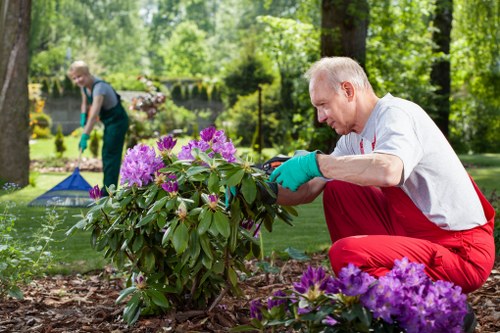
Crown thinning is the selective removal of small branches throughout the crown of a tree. The aim is not to drastically shorten the tree, but to reduce internal congestion and create a more open structure. This is very different from crown reduction, where the overall height or spread is reduced, or crown lifting, which removes lower branches to increase clearance underneath. When customers enquire about crown thinning in Waterloo, they are often looking for a solution that keeps the tree’s shape intact while improving light and safety.
For local gardens, this can be especially helpful where trees are close to boundary fences, patio areas, and neighbouring properties. In compact outdoor spaces, even a moderately dense tree can make a garden feel smaller and darker. Thinning the crown can restore a more comfortable balance between tree cover and usable space. In commercial settings, it can help maintain a tidy appearance while reducing the chance of branches catching wind or interfering with signage, windows, or access routes.
It is also worth noting that crown thinning is a careful, targeted service. A proper arborist does not simply remove random branches. They consider species, growth habit, branch structure, and the tree’s overall condition before making cuts. The goal is to preserve the tree’s long-term health and reduce avoidable stress. If done incorrectly, thinning can leave a tree unbalanced, weakened, or visually uneven. That is why choosing an experienced local service is important.
Why homeowners and businesses choose crown thinning

There are many reasons customers request crown thinning in Waterloo, and most are practical. One of the most common is light improvement. Dense canopies can significantly reduce sunlight in gardens, ground-floor rooms, and office spaces. By selectively removing branches, more natural light can filter through without stripping the tree back too heavily. For homes with shaded lawns, planting beds, or south-facing windows, that difference can be appreciated right away.
Another major reason is wind management. Trees with dense crowns catch more wind, which can create swaying, stress on limbs, and occasional branch failure in exposed or stormy conditions. By thinning the crown, the tree becomes more aerodynamically efficient. This is particularly useful in built-up parts of Waterloo where airflow is already affected by surrounding structures and where branches may extend over footpaths, roads, or neighbouring roofs.
There is also the matter of appearance. A tree can look full and healthy yet still be too heavy in certain areas. Thinning helps keep the tree looking naturally balanced, especially when the aim is to improve form rather than remove large sections. For many local customers, this is the ideal choice when they want a tree that still feels established and attractive but no longer dominates the property.
Common situations where thinning is requested
Many Waterloo customers contact a tree service when their trees begin to affect everyday use of the property. Typical situations include:
- Gardens that have become too shaded for planting or outdoor seating
- Branches rubbing against roofs, gutters, or neighbouring walls
- Trees near driveways that block visibility or make parking awkward
- Commercial courtyards where safety and presentation both matter
- Overly dense canopies that trap moisture and reduce airflow
- Trees that feel too heavy during periods of strong wind
Each of these issues can be addressed in a measured way through crown thinning, provided the work is planned properly and the tree is suitable for the treatment. A good local team will not recommend the same approach for every tree. Instead, they will assess the shape, species, age, and growing environment before deciding on the right level of pruning.
How the service works from enquiry to completion

When you arrange crown thinning in Waterloo, the process usually starts with an assessment of the tree and its surroundings. This is where the team looks at branch density, size, access, any signs of poor health, and the practical constraints of the site. In Waterloo, access can be a major consideration, especially in terraces, shared gardens, mews-style layouts, internal courtyards, and commercial premises with limited entry points. A local team will plan for these conditions in advance so the job can be completed efficiently and safely.
Once the assessment is complete, the pruning approach is agreed. This usually involves selecting specific branches to remove throughout the crown rather than cutting back the outer edge uniformly. The emphasis is on preserving the natural outline and reducing congestion. Skilled pruning also pays attention to branch spacing, balance, and the tree’s future growth. The result should be subtle rather than dramatic, with the canopy looking lighter but still full and healthy.
After the work is carried out, the site should be left tidy. Branches and debris are collected and removed, and any relevant access areas are cleared where possible. For many local customers, this clean finish is a major part of the service. If the tree is in a front garden, beside a shop entrance, or in a shared space, customers usually want the work completed with as little disruption as possible. A professional team understands that and plans accordingly.
Typical steps involved
Although every tree is different, the service often includes the following stages:
- Initial site assessment and discussion of the customer’s concerns
- Review of tree condition, canopy density, and access requirements
- Careful selective pruning to thin the crown
- Removal of dead, damaged, or crossing branches where appropriate
- Clearing and tidying the work area after completion
Good communication matters throughout the process. Customers should know what will happen, which areas may be affected, and what results to expect. If you are planning tree work around a family home, managed property, or business premises, that clarity helps the day go smoothly.
What is included in a crown thinning visit?
A crown thinning service is usually more than just cutting a few branches. The best results come from a careful, structured approach that considers both the tree and the property around it. For local customers in Waterloo, this often means working in spaces where trees are close to buildings, fences, parked vehicles, and pedestrian routes. The service should be designed to protect the tree while solving the problem that brought you to enquire in the first place.
Depending on the tree and the site, a visit may include a combination of light structural pruning, selective branch removal, and tidying of the crown. Where appropriate, deadwood or damaged limbs may also be removed if they are affecting the overall safety or appearance of the tree. The exact scope will depend on the tree species, its condition, and what the customer wants to achieve.
For practical purposes, customers often want to know what kind of outcome they can expect. In most cases, crown thinning should:
- Reduce crown density without changing the tree’s character
- Allow more daylight to pass through the canopy
- Improve air circulation around branches and leaves
- Lower wind resistance in exposed locations
- Make the tree feel less intrusive in a small space
- Help maintain a neat and balanced appearance
When crown thinning may be the right choice
This type of pruning is often suitable when a tree is healthy but simply too dense for its setting. It is common in established gardens, communal grounds, and commercial landscapes where customers want to retain mature trees but improve everyday usability. It can also be a sensible option if you have recently noticed that a tree is making rooms darker or shading out lawn areas more than before. If the issue is density rather than size, thinning may offer the right level of intervention.
Important note: crown thinning is not always the right answer. Some trees need a different form of pruning, while others may require only deadwood removal or no work at all. An honest assessment should always come first. That way, the tree gets the care it actually needs rather than a one-size-fits-all treatment.
Why local experience matters in Waterloo

Choosing a local company for crown thinning in Waterloo has practical benefits that go beyond convenience. Waterloo includes a mix of residential streets, apartment developments, commercial buildings, landscaped communal areas, and busier main routes. Each setting can create different access, storage, and traffic considerations. A local team is more likely to understand how to work around these realities without creating unnecessary delays or disruption.
Parking and access can be particularly important. Some properties have limited on-street parking, controlled access, or shared entrances that make loading and unloading equipment a challenge. In other places, the work may need to be scheduled carefully to avoid blocking driveways, shop entrances, or pathways. Local experience helps the team plan the visit efficiently so the service fits the site rather than the other way around.
Local knowledge also helps with seasonal timing. Some trees are better thinned at specific points in the year depending on species, condition, and the desired result. A team familiar with Waterloo properties can suggest a suitable time for the work based on practical conditions, not just textbook advice. That is especially useful for customers who want to avoid disturbing neighbours, protecting planting beds, or clashing with busy periods at a business premises.
Residential properties in Waterloo
Homeowners often request crown thinning when a tree begins to reduce usable garden space or shades out a patio, lawn, or kitchen window. Waterloo has plenty of homes where mature trees add character but also create close quarters with fencing, extensions, or neighbouring plots. In these settings, a careful thinning cut can keep the tree attractive while making the outdoor space feel brighter and more open.
For flats and shared residential properties, the priorities may be a little different. Residents may want less leaf drop, improved light, or lower wind loading near communal walkways. Property managers often look for work that is tidy, minimally disruptive, and easy to coordinate with residents. A professional local service understands that these jobs need clear planning and respectful site management.
Commercial customers in Waterloo
Businesses, landlords, and site managers may need crown thinning to maintain safety, curb appeal, and accessibility. Trees near entrances, public seating areas, loading bays, or retail frontages can look impressive, but only if they are managed properly. Dense crowns can block signs, reduce visibility, and create ongoing maintenance issues with leaf fall and branch movement. Thinning can help keep the space presentable and functional.
For commercial customers, timing and efficiency are often key concerns. Work may need to be completed before opening hours, around tenants, or during quieter periods to reduce interruption. A local service can often be more flexible and better suited to coordinating these practical needs.
How to prepare for crown thinning
Preparing for crown thinning in Waterloo does not need to be complicated, but a few simple steps can help the visit go smoothly. This is especially useful if the tree is in a confined space or near shared access routes. Good preparation can also reduce delays on the day and help the team work safely and efficiently.
Before the work begins, it helps to think about access, parking, and nearby items that may need to be moved. If the tree is in a garden, you may want to clear furniture, ornaments, bikes, or other obstacles from the work area. If it is near a driveway or entrance, make sure vehicles can be repositioned if needed. In commercial settings, it may be useful to notify staff or neighbours if branches will be brought through a shared area.
Preparation checklist:
- Make sure the team can access the tree safely
- Move cars, bins, or garden furniture if possible
- Keep pets and children away from the working area
- Let neighbours or nearby occupants know if access is shared
- Point out any boundary concerns, cables, sheds, or fragile surfaces
- Discuss any particular concerns about light, privacy, or branch overhang
What you do not need to do
You do not need to prune the tree yourself beforehand or guess which branches should come off. In fact, it is usually better not to interfere before the assessment. A professional arborist should decide the cuts based on the tree’s structure and the intended outcome. If you have concerns about health, overgrowth, or safety, simply mention them when requesting a quote or arranging the visit.
If your tree appears to have disease, major deadwood, or visible structural problems, it is important to mention that early. That allows the team to plan the service correctly and decide whether crown thinning is suitable or whether another treatment would be more appropriate.
Pricing factors for crown thinning in Waterloo
Customers often want to know what affects the cost of crown thinning, and while exact prices depend on the site, there are several common factors that influence the quote. Because trees and properties vary so much, it is hard to give a meaningful estimate without seeing the work. A responsible local company will usually assess the tree first or ask detailed questions before providing a price.
Factors that can affect pricing include the size and height of the tree, the density of the canopy, the amount of pruning required, and the complexity of access. A tree in an open front garden is usually easier to work on than one squeezed into a rear courtyard with limited access and no easy place to stage equipment. Similarly, trees near roads, overhead obstacles, or neighbouring structures may require extra care and setup.
Other considerations may include the need for additional tidy-up, the volume of branches to remove, and whether the work needs to be coordinated around residents or business hours. In Waterloo, where property types and access conditions vary significantly, that site-specific approach is especially important. The quote should reflect the real conditions of the job rather than a generic one-size-fits-all figure.
What to expect from a quote
A helpful quote should make it clear what is included, what the work aims to achieve, and whether any special access or waste removal considerations apply. Customers should feel able to ask questions about the method, the likely outcome, and the time required. If the tree is large or the site complex, it is perfectly reasonable to request an on-site assessment before agreeing to anything.
Transparent communication is valuable. You do not need a hard sell; you need a clear explanation of the work and a practical plan that suits your property.
Why choose a local company for crown thinning in Waterloo
There are real advantages to working with a local tree service rather than someone unfamiliar with the area. Local teams tend to understand the pace, access issues, and property layouts that are common in Waterloo. That means less time spent dealing with avoidable problems and more time spent getting the pruning right. If a tree sits close to a neighbour’s boundary, a busy walkway, or a shared yard, this kind of awareness is a major benefit.
Another reason to choose local help is responsiveness. If you need work arranged around school runs, business hours, letting changes, or maintenance schedules, a nearby company is often better placed to fit the job into your routine. That matters just as much as the pruning itself. For many customers, the ideal service is one that is tidy, punctual, and straightforward to organise.
Local companies are also better at understanding the types of trees commonly found in the area and the way they interact with nearby buildings and outdoor spaces. Mature street-side trees, ornamental trees in small gardens, and larger boundary trees all need slightly different handling. The right approach protects the tree while making the property more practical for daily use.
Benefits of a professional approach
- More natural-looking results
- Better balance between tree health and property needs
- Reduced risk of poor pruning decisions
- Cleaner and safer work on-site
- Clearer planning around access and clearance
- Less disruption for neighbours, residents, or customers
If you want a tree to look lighter, feel safer, and keep its shape, professional crown thinning is often the right starting point.
Areas covered around Waterloo
Customers looking for crown thinning in Waterloo often need service not just in the immediate centre, but across the surrounding neighbourhoods and nearby parts of the wider area. This can include residential streets, mixed-use districts, business locations, and properties where trees are growing in tight or awkward positions. A local team is usually familiar with the variety of access conditions found across this part of London.
Service coverage may extend to nearby locations such as:
- South Bank
- Lambeth
- Kennington
- Elephant and Castle
- Borough
- Vauxhall
- Blackfriars
- Westminster edges and surrounding central areas
Whether the tree is in a private garden, shared courtyard, commercial forecourt, or managed property, the same core principles apply: careful pruning, safe working, and a result that suits the site. If your property has limited parking, restricted loading, or awkward pedestrian access, that can be discussed in advance so the job is planned correctly.
Frequently asked questions
How is crown thinning different from crown reduction?
Thinning removes selected branches throughout the canopy to reduce density, while reduction shortens the overall size of the tree. If you want to keep the tree’s shape but let in more light, thinning may be the better option.
Will thinning damage the tree?
When done correctly and in sensible amounts, crown thinning is a standard arboricultural practice that can help the tree by reducing overcrowding and wind stress. The key is selective pruning rather than excessive removal.
Can all trees be thinned?
Not every tree is suitable for the same level of thinning. Species, health, age, and structure all matter. A proper assessment will determine whether the tree is a good candidate.
Do I need permission for the work?
Some trees may be protected or subject to local restrictions. If that applies, it should be checked before work begins. A reputable local team can help you understand whether any formal steps are needed.
How often should thinning be done?
That depends on growth rate, species, and site conditions. Some trees may need light maintenance every few years, while others require less frequent attention. The best timing is based on the tree’s condition and how quickly it has regrown.
Can crown thinning improve light inside the property?
Yes, in many cases it can. While it will not turn a shaded space into full sun, reducing dense canopy growth often makes a noticeable difference to daylight levels.
Ready to discuss your tree?
If you are considering crown thinning in Waterloo, now is a good time to request an assessment and talk through what you want to achieve. Whether the main issue is shade, wind exposure, tree appearance, or limited space, a properly planned service can make your property feel more open and manageable. Contact us today to request a free quote, ask about your tree’s suitability, or book your service now.
For homeowners, landlords, and businesses alike, the aim is the same: a healthier-looking tree that fits the property better and causes fewer day-to-day problems.
If you have a tree that feels too dense, too dominant, or simply too close for comfort, crown thinning may be the practical solution you need. A local Waterloo service can help you get the balance right with careful, professional pruning tailored to your site.